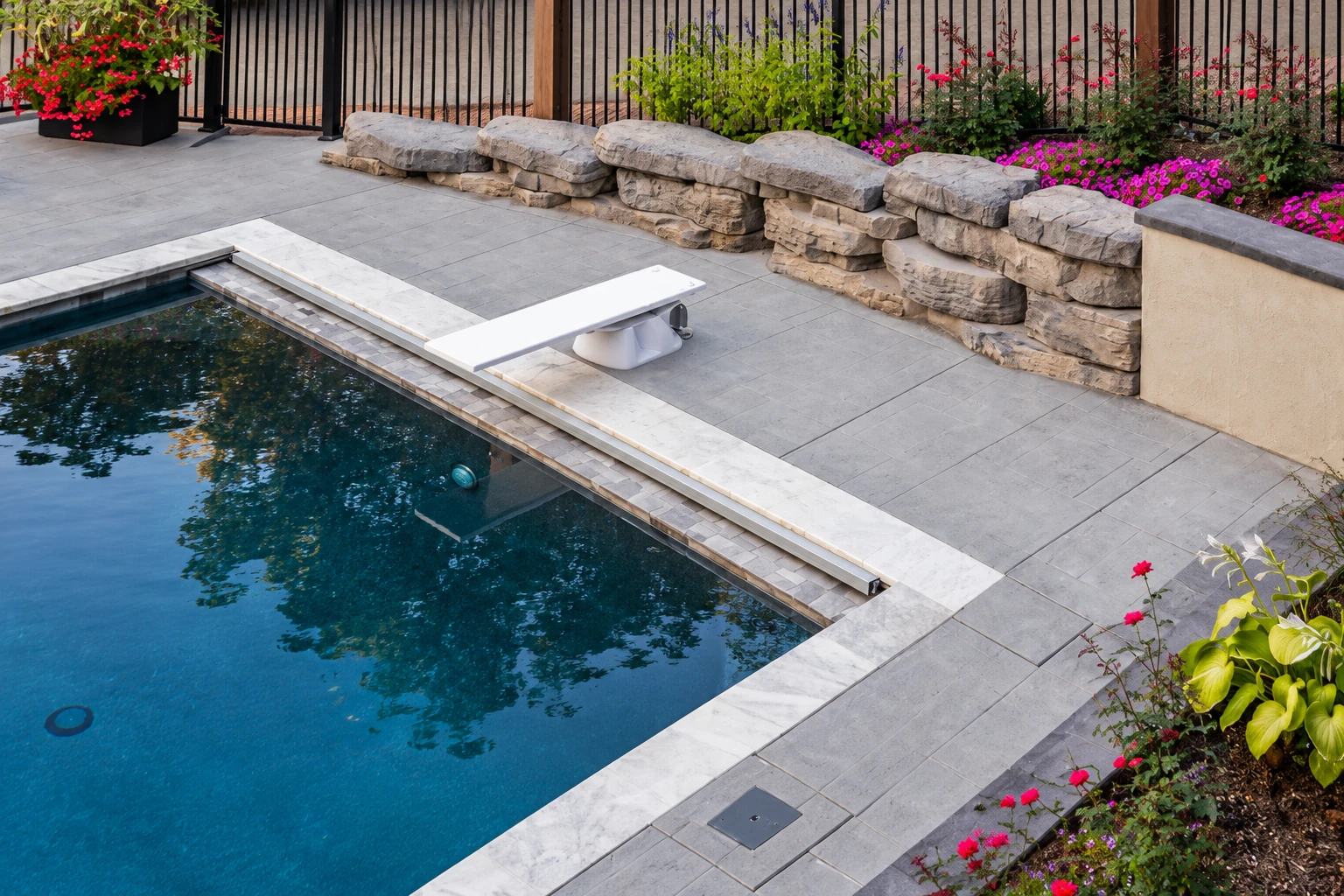
I start by looking hard at the old deck, because some can be resurfaced and some can't, and a coating over broken concrete is just a fresh coat of paint on the cracks. When the deck has to go, we cover the pool and protect the plants, then break out the old slab and haul it off. Next we dig out the subgrade, the ground the slab sits on, and pack it firm instead of raking it level, since loose dirt settles and takes the deck down with it. If the budget gets tight, I'd rather you spend less on the surface than on the base, because nobody sees the base on day one and everybody sees it a few years later. We set the forms against the coping and leave room for movement there, so the deck and the pool's edge don't fight each other. We plan the pour around the heat, because midday sun dries the top too fast and leaves it weak and dusty. Then we finish the surface, cut control joints, which are grooves that give the slab a planned place to crack, and protect the new concrete while it cures, the slow drying that gives it its strength.
A pool deck rarely ends at the deck. If you step down from the back door or the yard sits higher than the pool, we can rebuild those concrete steps so they meet the new deck at the right height. If a pool house or an equipment pad is in the plans, our slab foundation building covers it, and it's easier to pour while the crew is already in the yard.
Resurfacing a deck that's still sound
This suits a deck that's solid underneath but looks tired, with worn spots, stains or small flaws on top. It costs less than a tear-out, but it only holds up when the old concrete is a good candidate, which is why I check before I recommend it.
Tearing out and pouring a new deck
This is for decks with sunken sections, wide cracks or a base that has given up. It's more work, but it's the only way to fix what's underneath, and it lets us set the joint at the coping right from the start.