Broom-finished driveway
This suits most homes and most budgets, because the light broom texture grips when it's wet and is easy to hose off. It's the plain gray driveway you see up and down the street, and on a well-packed base it's hard to beat.
Cracked, sinking or puddling driveway? We dig out, pack the ground and plan the joints so the new one stays flat.
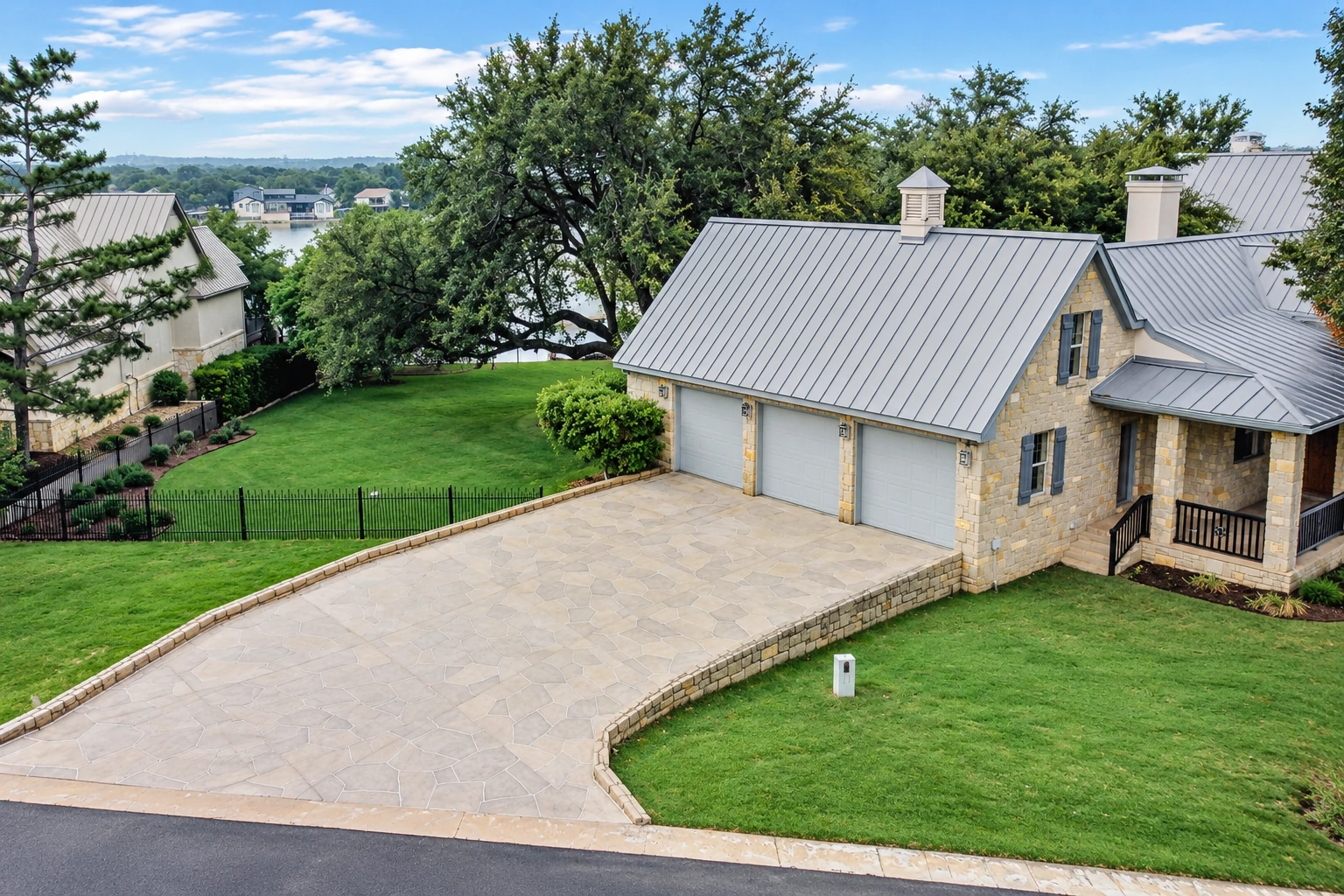
Concrete driveway building in Azusa means breaking out the old slab, getting the ground under it firm and even, then forming, pouring and finishing new concrete that carries your cars and sends rainwater toward the street instead of the garage.
Usually you're calling because the old driveway has a crack that runs wherever it pleased, a corner that sank or a puddle that sits by the garage door after it rains, and most of the time the concrete wasn't the real problem, because the ground under it moved or nobody planned where it would crack. The price moves with the size of the driveway, how much old concrete has to come out, how much work the ground needs, how easy it is to get a truck in and which finish you pick. The schedule turns on the tear-out, the base work, the weather on pour day and the wait before you can drive on it, so I'll come out, measure, and the estimate gives you the number for your own driveway.
I come out to look at your driveway and write the estimate myself, so the person who measured it is the person running the job. Our own crew does the work, and I'm on site for it, from the tear-out to the last joint cut.
I learned on new construction crews, pouring footings and slabs on empty lots, and started this business in 2013 to work on homes people already live in. Those jobs come with trees, sprinklers, neighbors and a dog that wants to help, and we work around all of it.
We're fully licensed and insured. Our work is backed by our satisfaction guarantee, so if something about your driveway doesn't sit right, tell me while I'm there. When you're ready, call (626) 540-1248 or use the form to set up a visit.
We get back to you within one business day to set a time, then I come out, look at the driveway and write you a free estimate on site, with no pressure and no obligation. It helps to have a rough size in square feet ready and to know whether the driveway sits at ground level or over a basement.
The City of Azusa asks for a building permit when structures are built or changed, but its list exempts driveways no more than 30 inches above the ground around them and not over a basement. That exemption covers the building permit only. If the work reaches the street or changes the grade of your lot, questions about encroachment and grading permits go to the city's Public Works Engineering Division, and if you're adding lights along the driveway, the city still wants a separate electrical permit for that wiring. Before work starts, we check with the office that covers your address, and when a permit is needed, we pull it and handle the paperwork.
We're based in Azusa and work in the cities around it, from Glendora and Covina to Pasadena and Pomona. Most driveways we replace around here are older slabs at houses people have lived in for years, with trees, sprinklers and a front yard nobody wants torn up, so we keep the mess inside the driveway and clean up as we go.
A concrete driveway in the Los Angeles area usually costs about $7 to $15 per square foot. That's what the market charges around here, not our price, and where yours lands depends mostly on how much tear-out and ground work it needs. For a number on your Azusa driveway, I'll come out and measure.
Plan where it cracks and give it fewer reasons to, because concrete cracks and the goal is straight lines in places you chose. Even, uniform ground matters more than strong ground, since steady support keeps the slab from bending and building up stress under your cars. Joints sawed or tooled into the slab steer the cracks, and the first days count most, because a young slab hasn't built the strength to resist cracking yet.
Plan the pour around the heat and keep the surface from drying out while it cures, because hot weather speeds up the cement and dries fresh concrete fast, which causes trouble from delivery to finishing. Low humidity and wind make it worse. When the concrete has the strength it needs and the curing keeps the top from drying, a hot-weather slab generally lasts about as well as one poured on a mild day, so ask any contractor how they'll cure yours.
A contractor holding California's C-8 concrete license, which covers pavement and flat concrete work, the jobs the trade calls flatwork. The state lets unlicensed workers take only small jobs up to $1,000, and only when the work needs no permit and they have no employees. For a driveway, ask any bidder for their license before you sign.
It starts with me on site, looking at the old slab, where your water runs and what around the driveway needs protecting. The estimate lays out the tear-out, the base work, the finish and the joint layout, and once you say yes, we check permits and set pour day around the weather.